Dr. Gymbro
←

#protein timing

2 articles
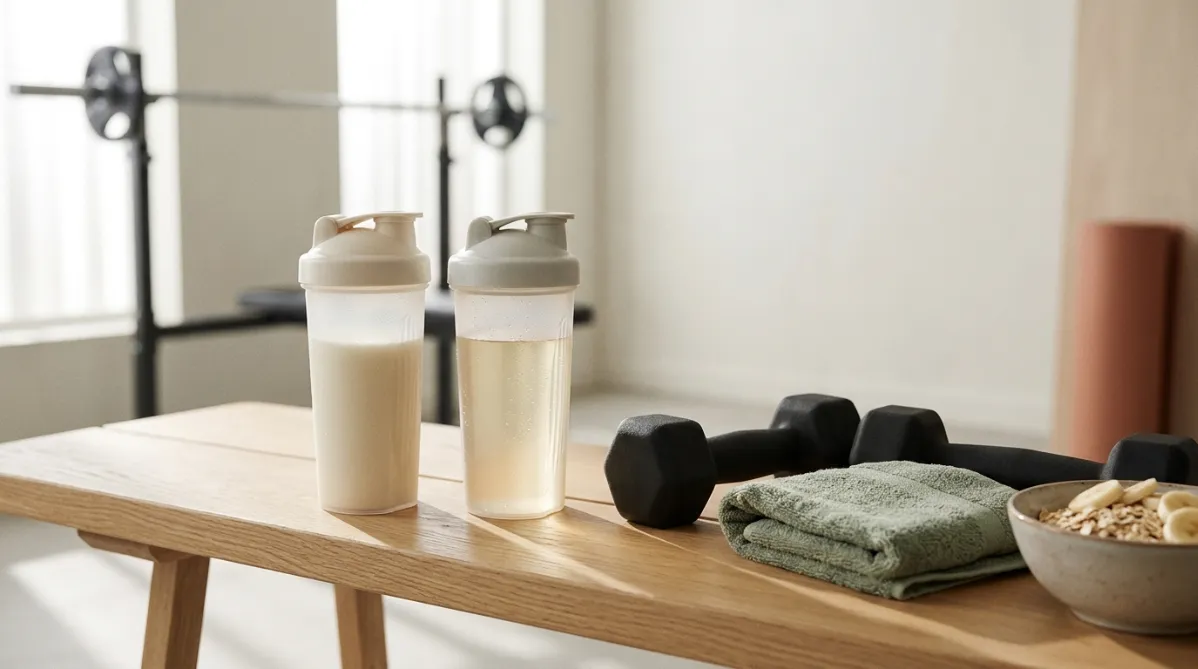
A wide, softly lit editorial still life on a clean, light oak gym bench in a bright, minimalist training studio. In the foreground, two matching frosted translucent shaker bottles stand side by side. One holds a pale, creamy white drink and the other a clear, faintly golden carbohydrate drink. Condensation beads on both. Beside them rest a pair of matte black hex dumbbells and a folded sage-green towel. A small ceramic bowl of rolled oats and a sliced banana sit at the edge of the frame, hinting at a balanced daily meal. In the soft-focus background, tall windows let in diffused morning light, and a barbell rack is blurred into gentle geometric lines. The palette is muted and modern: warm cream, sage green, charcoal, and soft terracotta accents. Light falls from the left in long, gentle shadows across the bench. The composition is airy, with generous negative space on the right third for the headline. The mood is calm, credible, and contemporary, like a premium health and science journal feature. Shallow depth of field, crisp textures on the wood grain and glass, and a subtle film-like grain. No people, no text, no futuristic elements.
nutrition

Shake protéiné intra‑séance : une étude biopsique de 8 semaines n’a pas révélé d’hypertrophie supplémentaire

BY DR. GYMBRO ·

Vous pensez devoir boire des protéines pendant l’entraînement sous peine de perdre vos gains ? Une étude suédoise randomisée, incluant des biopsies musculaires, montre le contraire. Pendant 8 semaines, des hommes entraînés à jeun ont développé autant de muscle avec une boisson uniquement glucidique qu’avec des glucides + protéines. En revanche, le simple fait de soulever des poids a entraîné une croissance généralisée des fibres de type IIA et a presque éliminé les fibres de type IIX. L’étude est petite et exploratoire, donc de modestes effets ne peuvent être écartés, mais le message pratique est clair : l’entraînement et l’apport quotidien total en protéines passent avant tout.
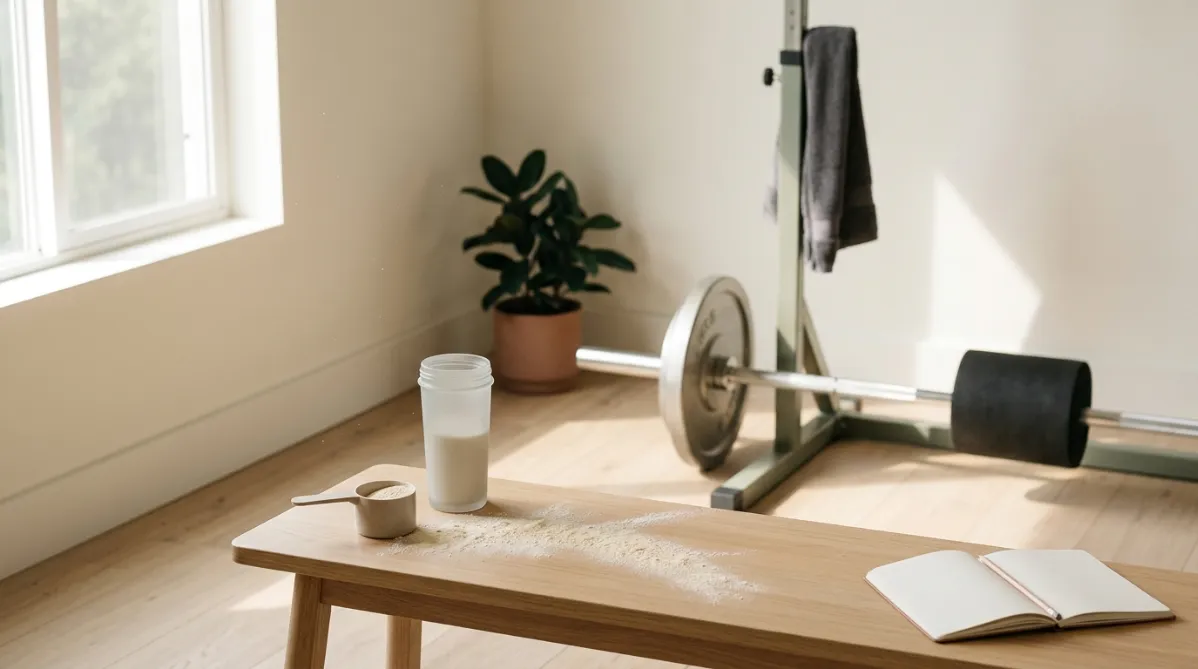
A wide, softly lit editorial photograph of a minimalist home gym corner with pale oak flooring and a warm off-white wall. In the foreground on a light wooden bench sits a matte ceramic scoop resting beside a simple frosted glass shaker bottle, with a delicate dusting of fine cream-colored protein powder spilled across the wood in a natural, casual arc. In the soft-focus midground, a loaded barbell rests on a squat rack with brushed steel plates, and a neatly folded charcoal towel hangs over the rack's upright. To the right, a small open notebook with a pencil lies on the bench, suggesting tracked training logs, with no legible text. Morning sunlight streams diagonally through a large window on the left, casting long gentle shadows and a warm golden glow across the scene, with subtle dust motes floating in the light. The color palette is muted and modern: sage green, warm sand, soft terracotta, and cream, with a single accent of deep forest green from a potted plant in the background corner. Shallow depth of field, crisp detail on the powder and scoop, creamy bokeh on the barbell. Shot as if with a 50mm lens at f/2, natural film-like grain, clean negative space on the upper right for headline overlay. The mood is calm, thoughtful, and science-minded, with a contemporary wellness magazine aesthetic, realistic and tactile, with no people, no logos, and no text.
nutrition

La poudre de protéine augmente-t-elle la force ? 23 essais dévoilent le hic

BY DR. GYMBRO ·

Ajouter de la poudre de protéine à votre entraînement rend‑il vraiment plus fort ? Une méta‑analyse de 2026, portant sur 23 essais randomisés et 611 jeunes adultes, a trouvé un avantage moyen de 7,4 kg au squat et de 2,6 kg au développé couché. Le bénéfice au squat était surtout présent dans les programmes de 12 semaines ou moins et dans les essais où la protéine était prise autour des séances et avant le coucher. Le signal lié au timing était toutefois marginal, aucune dose optimale n’a été établie, et les auteurs soulignent que le gain est conditionnel, pas universel. Voici ce que les données soutiennent et ce qu’elles ne soutiennent pas.

This page is available in